The potential for cheap or inferior construction equipment and materials from China to end up in the United States is a multi-pronged, wide-ranging and complex problem—and it comes with a host of potentially detrimental effects.
The issue pertains to trade rules, behaviors that take advantage of trade loopholes, rising construction input costs, and the possible repercussions for contractors, clients and consumers from artificially discounted—at times hazardous—products being dumped into the United States. And there’s more at play here, including intellectual property theft and national security concerns—all as new tariffs may be imposed on China and other foreign nations in 2025 and beyond.
The bottom line: This is a dynamic situation for American contractors and builders striving to ensure quality services as well as fair and open competition at home and abroad.
LOOKING AHEAD
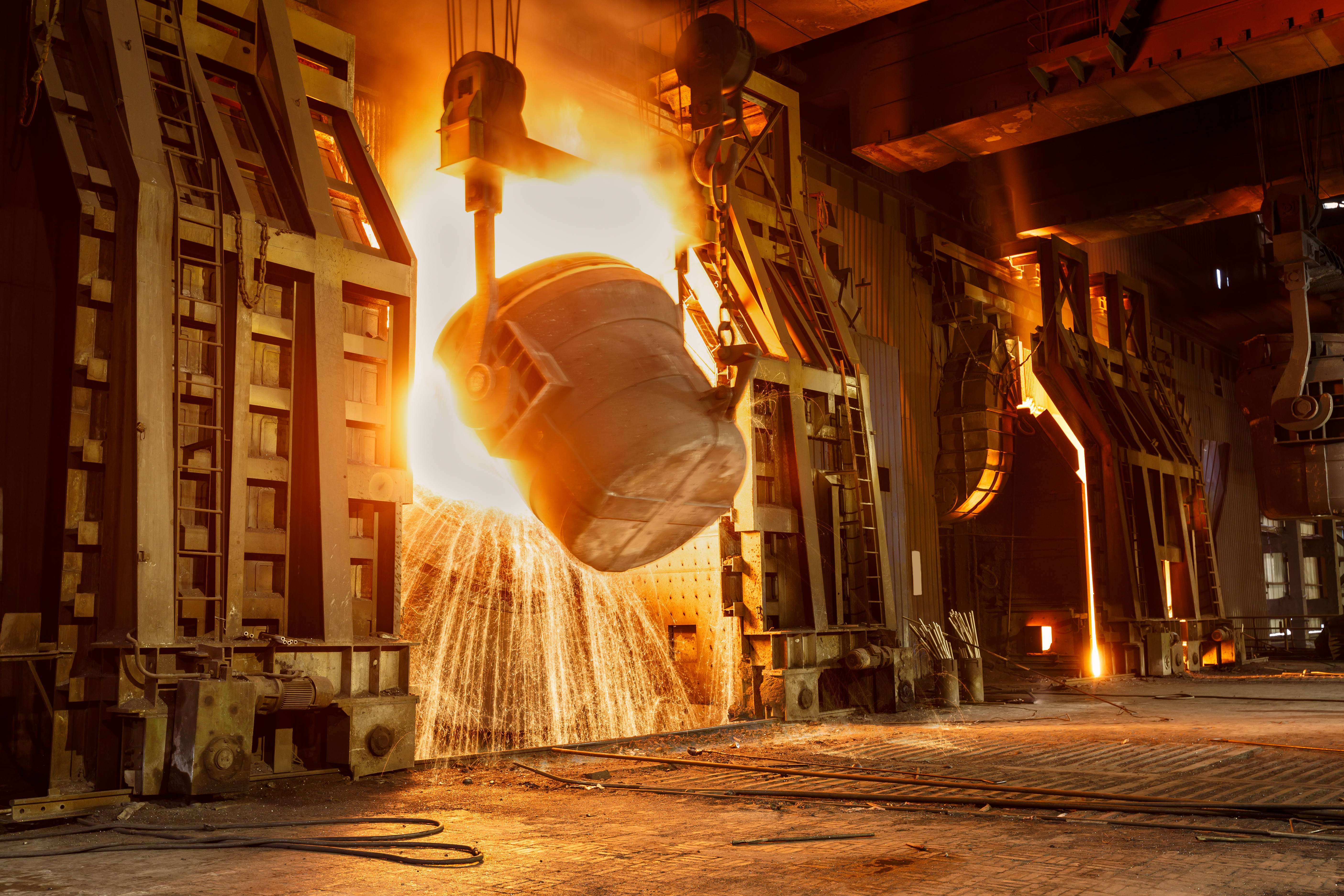
Stakeholders, lawmakers, business leaders and others inside and outside of the construction industry are watching for new tariffs on steel, aluminum and other products in President Trump’s second term. In 2018 and 2019, the first Trump administration ordered tariffs of 25% on imported steel and 10% imported aluminum. The tariffs were removed late in 2021 by the Biden administration, which then reinstated tariffs on steel, aluminum and other sectors in 2024.
“Obviously, there’s a track record, and I anticipate that the new administration will continue to address this issue,” says Mike Bellaman, president and CEO of Associated Builders and Contractors.
Another factor could intensify the issue in the near term: Concerns of an imminent, so-called China Shock; in other words, that China’s slowing domestic economy may spur even more subsidies for exporters to move increasingly larger volumes of products around the world, impacting local industries and markets. While tariffs could conceivably reduce the volume of cheap and inferior goods coming into the American construction market, they could also spark trade wars.
Cheaper materials and equipment find ready markets, of course, especially if prices in those markets are rising—and in the United States, construction input prices have climbed by more than 38% since early 2020 according to U.S. Bureau of Labor Statistics data. “That increase corresponds with increased overall costs for commercial and residential construction,” explains Josh Leonard, senior manager of legislative affairs for ABC.
Leonard argues: “While inferior or counterfeit products may reduce costs, contractors should prioritize longevity and reputation over lower prices.” Put another way, going with cheaper alternatives may have hidden price tags for builders, contractors, their clients and other stakeholders.
TELLING CASES
In 2009, it was reported that defective drywall manufactured by numerous companies in China was installed in approximately 100,000 homes across 20 U.S. states (figures vary) from 2001 to 2009. During that period, many contractors in Gulf Coast states and elsewhere turned to Chinese suppliers in the wake of destructive hurricanes, which spurred home-building and repair projects that depleted domestic stocks. However, the drywall from China generated noxious fumes, raising concerns about negative effects on homeowners’ health, and caused corrosive damage to the homes. The incident spurred a federal investigation and sparked several legal battles. At one point, insurance underwriters reportedly estimated that replacing the product could cost anywhere from $15 to $25 billion. In short, the matter “caused havoc in our industry,” Bellaman says.
Leonard points to an October 2024 report on the matter by the U.S. House of Representatives Committee on Oversight and Accountability. The committee’s report, Leonard explains, “highlights that goods produced by the People’s Republic of China expose the American public and U.S. infrastructure to risk.”
Another case detailed in the report describes flawed parts supplied by Shanghai Zhenhua Port Machinery Co. Ltd. for the California Department of Transportation’s $6.4-billion San Francisco-Oakland Bay Bridge project, which ran from 2006 to 2012. ZPMC—which had previously manufactured port cranes and had not constructed bridges—reportedly submitted the lowest bid, saving Caltrans nearly $250 million for the construction of the bridge’s eastern span. Contractors detected and warned officials that parts for the project were riddled with cracks, violating codes and the bridge contract—resulting in increased costs and construction delays.
“Construction industry contractors should keep product origin and contractor credentials in mind while completing projects and soliciting bids,” Leonard says.
PERPLEXING PRACTICES
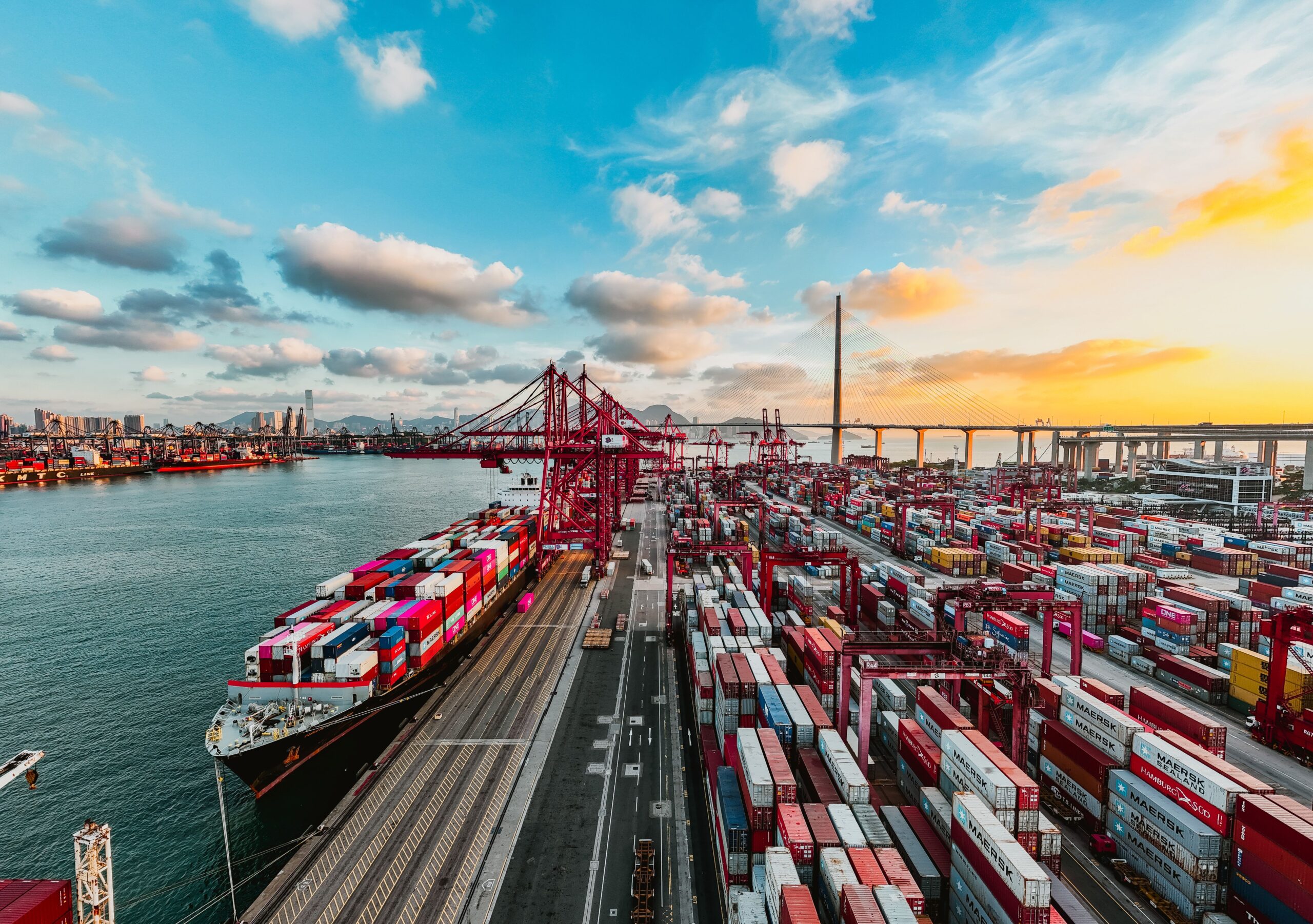
As Tim Morris, chief commercial officer for JLG Lift Equipment, explains: “Chinese manufacturers of access equipment continue to seek to expand their market reach into the United States. These manufacturers are setting up facilities in the region to circumvent anti-dumping and countervailing duties. In some cases, Chinese original equipment manufacturers are electing to pay the tariffs and continue to sell and distribute products made in China in the U.S. market.”
JLG points to a U.S. Customs and Border Protection investigation involving Sinoboom North America, a subsidiary of a Chinese access equipment manufacturing company, Sinoboom Intelligent Equipment Co. Ltd. According to CBP, the investigation—which began in October 2024—is “examining the evasion of antidumping and countervailing duty orders” on mobile access equipment from China.” CBP’s investigation notice explains that the law enforcement agency “found there is reasonable suspicion that Sinoboom entered Chinese-origin [mobile access equipment] into the customs territory through evasion by claiming Poland as the country of origin for the merchandise.”
In another scheme, numerous companies in China reportedly avoid existing tariffs in a system that breaks export products into small portions. The activity also eludes efforts to track a product’s origin.
FIGHTING ON ALL FRONTS
On another front, China-to-United States exports of counterfeit products, at times reverse engineered by unauthorized means, reportedly reached about $600 billion in 2021—and that number is trending upward. Additionally, some Chinese companies that supplied products considered dangerous for American consumers have reportedly battled U.S. Consumer Product Safety Commission accountability.
Reverse engineering can be a tactic of intellectual property theft—yet another serious issue impacting American construction and cited by the Biden administration when it announced new tariffs on steel and aluminum in 2024. Bellaman explains that if foreign equipment resulting from IP theft is sold at an artificial discount in the United States, then “obviously, this is not fair and open competition. So, it’s concerning to our industry and to the manufacturers that supply equipment to our industry. IP theft is using American innovation to undermine American industry.” And it’s not just a U.S. problem—it’s happening around the world.
Inexpensive materials produced in some foreign markets do not necessarily meet the stringent specifications and testing requirements of an export market such as the United States. Further, as with China, some governments subsidize exporters to such markets, creating artificial discounts that can cause major problems, both for domestic industries in the United States as well as for product safety and longevity.
With this perfect storm of factors, Bellaman says, “You get to a point where our national supply chain becomes threatened. Could you imagine a country without the capability to develop crucial raw materials? Think what that would do to our nation’s military infrastructure from a national security perspective.”
SEEKING SOLUTIONS
Stakeholders have continued to work toward solutions to these complex problems for years. Morris indicates that U.S. Department of Commerce and International Trade Commission antidumping and duty decisions involving Chinese producers of access equipment “have helped to protect the U.S. market from unfair trade practices.”
Also a consideration is the Fair Trade with China Enforcement Act. The legislation, now making its way through Congress, would ban both the sale of certain intellectual property and technologies to China and the federal government from buying telecommunications equipment from two major Chinese companies: Huawei and ZTE.
Efforts continue. Morris says, “As China trade issues are bipartisan, we continue to engage a wide range of supporters. We supported passage of the proposed Fair Trade With China Enforcement Act, providing language to address Chinese producers sending finished product through Mexico and into the U.S. market.” He adds, “We look forward to working with the 119th Congress and the new administration on this important policy matter.”
LET’S TALK TARIFFS
In terms of possible tariffs, those that are carefully crafted to take the entire supply chain into account could close loopholes. “I’m not an advocate of tariffs,” Bellaman explains, “however, if that’s the only solution as you are trying to level a global supply chain, then you’ve got to look at it.”
For example, loopholes have allowed fabricated steel that was originally manufactured in China to enter the United States because tariffs were imposed on raw, not fabricated, steel. Bellaman puts it this way, “If a piece of raw steel goes from China to a steel fabricator in, say, Detroit, they are tariffed on it. But let’s say there’s a steel fabricator in Windsor, Canada. If they get that raw steel, there’s no tariff on it. If they fabricate it—for example, cutting, welding or drilling holes in the steel—and drive it across the bridge to Detroit or elsewhere in the United States, there’s no tariff. The same thing with car manufacturers in Mexico, for example, which have opened up a lot of car fabrication plants there, which is a way to avoid those tariffs.”
In other words, “if you’re going to tariff, tariff the origin of the steel,” says Bellaman, who nevertheless points out that the origin of a product “may be tough to detect, and if so, do you tariff all imported steel? That would disincentivize good behavers,” such as Canada.
As Leonard explains, the new Congress and presidential administration “may revise or expand Buy America preferences [that] require the use of certain U.S.-made products, such as iron, steel and construction materials on specified federal infrastructure projects, including those funded by the Infrastructure Investment and Jobs Act.”
It is essential that contractors working with the federal government be aware of “legislation and Office of Management and Budget guidance related to Buy America preferences,” says Leonard, as well as “waivers to those preferences to ensure compliance with federal award requirements.”
The construction industry overall “should look toward legislation signed into law during the Trump administration as part of the budget reconciliation process,” he explains. That process, Leonard says, is when “the U.S. House and U.S. Senate agree to advance legislation on majority support rather than meeting the 60-vote threshold required in the Senate.” It matters because “the process may impact federal infrastructure investments and the requirements on select projects,” adds Leonard.
The aforementioned House Committee report has other recommendations, including among other things “a cohesive government-wide strategy” to confront China on trade and other practices, and for “federal officials to candidly communicate with the public and Congress” about a wide array of Chinese initiatives.
“It’s tough. You always want a free market,” Bellaman adds, “And when you try to impose rules, the market will figure out a way around them. When there are bad behavers, it’s going to be a constant whack-a-mole issue.”
Whatever changes in U.S. trade policies and practices may be coming, it seems clear that safeguarding American industries will require savvy policymaking. And even that will not be a done deal: Remedies will also require ongoing vigilance, adroit pivoting to address evolving practices across borders and enforcement of whatever rules are enacted.
As Morris adds, “Even with tariffs in place, more effort is needed to ensure that the U.S. government strictly enforces tariff requirements.”